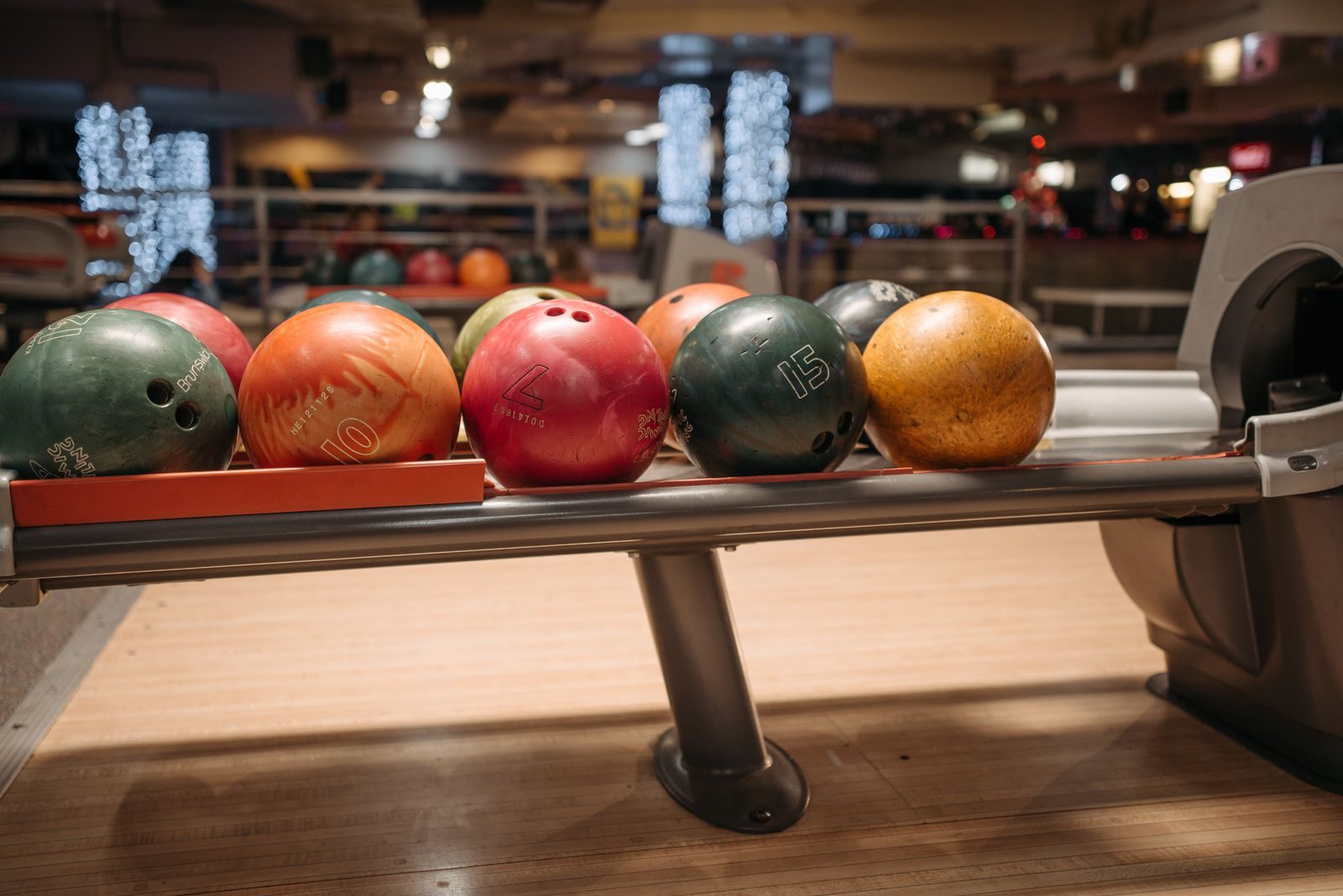
Choosing a Bowling Ball
The right weight and a comfortable fit make every other skill easier.
Back to the BasicsChoosing the right bowling ball is one of the most useful bowling tips for beginners, because the wrong ball makes everything else harder. Here is how to pick a house ball that fits, and what changes when you get your own.
Weight
Start with a common rule of thumb — about 10 percent of your body weight, up to the 16-pound maximum — then test it. Hold the ball in your bowling hand with your arm bent at 90 degrees for a few seconds. Then take a few practice swings. The right weight:
- swings without your shoulder dropping or your wrist bending back,
- doesn’t make you rush or hurry your steps,
- still feels comfortable in the third game.
Kids and many adults bowl better with lighter balls. There is no prize for using a heavy one.
Fit: Finger Span and Holes
- Thumb hole: your thumb should slide in and out with slight friction, without catching or spinning loosely.
- Finger holes: middle and ring fingers go in to the second knuckle on a house ball (a “conventional” grip).
- Span: with your thumb fully in, lay your fingers flat over the finger holes. The crease of your second knuckle should sit a little past the front edge of the holes. Too long a span stretches your hand; too short cramps it.
- If the ball only stays on your hand when you squeeze, the fit is wrong — try another ball.
House Ball vs Your Own Ball
| House ball | Your own drilled ball | |
|---|---|---|
| Fit | Generic holes; you choose the closest | Drilled to your hand, usually with fingertip grip |
| Cover | Usually plastic (polyester), rolls straight | Plastic, urethane or reactive resin, each hooking differently |
| Good for | Casual games, spares | Regular bowlers wanting consistency and hook |
A pro shop at a bowling center can measure your hand, recommend a weight and cover type for your style, and drill the ball. Many regular bowlers end up with two: one that hooks for strikes, and a plastic ball for spares.
Shoes and Accessories
Rental shoes are fine for casual bowling. Bowlers who play often buy their own, and serious bowlers use shoes with an interchangeable sliding sole on one foot and a braking heel on the other. A towel to wipe oil off the ball and a little rosin or grip aid are the only other things a beginner might want.
Ball Questions
What is the heaviest bowling ball allowed?
Sixteen pounds is the maximum under USBC specifications. Balls come in a range of lighter weights for kids and adults.
Is a heavier ball always better?
No. A heavier ball can carry pins a little better, but only if you can control it. A ball you can swing smoothly and accurately will score better than a heavier one you muscle.
Should I buy my own ball?
If you bowl regularly, a ball drilled to your hand is the single biggest upgrade, because the fit lets you relax. Have it fitted and drilled by a pro shop operator at a bowling center.
Mind Your Manners on the Lanes
A few simple courtesies make bowling more fun for everyone on the pair of lanes you share.
Read the Etiquette