How to Bowl a Strike
Hit the pocket, adjust your feet, and make the spares that build scores.
Check Your BallEvery bowler wants to know how to bowl a strike. The honest answer: hit the pocket, at a slight angle, with the same delivery every time. Then make your spares, because spares are where beginners gain the most pins.
Find the Pocket
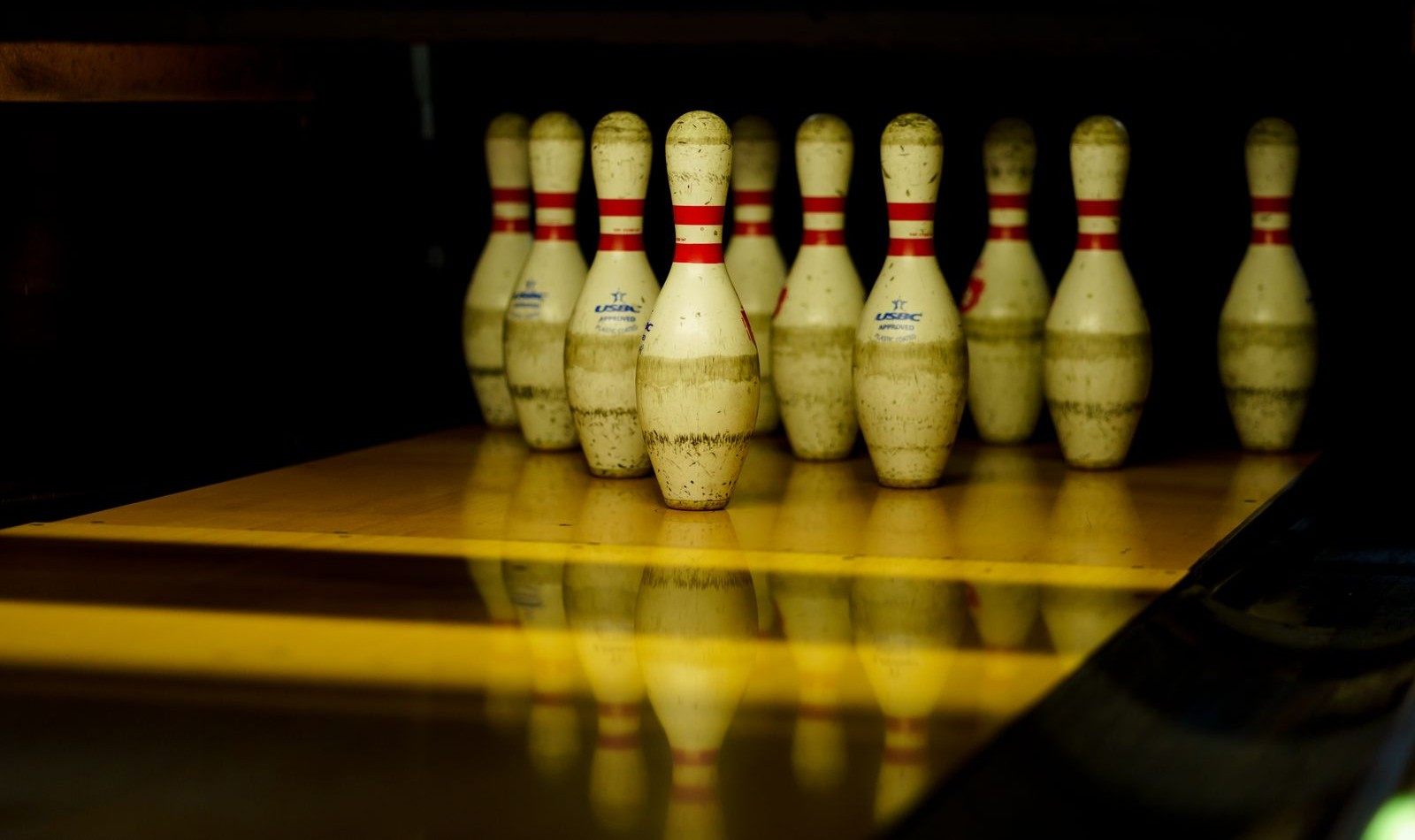
Number the pins from the front: the head pin is 1, the second row 2 and 3, then 4-5-6, and the back row 7-8-9-10. The pocket is the gap between the 1 and 3 pins for right-handers (1 and 2 for left-handers). A ball hitting the pocket knocks the head pin into the pins on one side while the ball drives through the other, setting off the chain reaction that knocks all ten down.
A ball that hits the head pin dead center often leaves a split. One that only clips the edge of the pocket may leave a corner pin.
How to Bowl a Strike: Practical Steps
- Choose a starting spot and a target arrow, and keep both the same for several frames.
- Watch where the ball hits the pins. If it hits too far left of the pocket (right-hander), move your feet a board or two left and keep the same arrow; if it hits too far right, move right.
- Keep your speed steady. Throwing harder usually costs accuracy.
- Note how the ball reacts in the last third of the lane. Lanes are oiled, and the ball grips more as it reaches the drier back end.
- Once you are consistent, a coach can help you add a gentle hook for a better angle into the pocket.
Picking Up Spares
A simple system works for most spares: move your feet so the ball travels across the lane toward the pins you need.
| Leave | Where to stand and aim |
|---|---|
| 10 pin (right corner) | Move to the left side of the approach and roll across the lane toward the right corner. |
| 7 pin (left corner) | Move to the right side of the approach and roll across toward the left corner. |
| Center pins (5, or 1-2-4-5) | Use your normal strike starting spot and target. |
| Several pins in a cluster | Aim for the front pin, slightly toward the side with more pins behind it. |
The cross-lane rule works for right- and left-handers alike: the farther a pin is to one side, the farther you move to the other side.
Many bowlers throw a straighter ball at spares, especially single pins, because there is less to go wrong. Some keep a separate plastic ball just for spares, since plastic hooks less.
Splits
A split is a leave where the head pin is down and the remaining pins have a gap between them. Some, like the 3-10 or 4-5, are makeable; others, like the 7-10, are rarely picked up. Ask yourself whether you can hit one pin into the other. If not, play for the single pin that gives you the surest count — a nine is better than an eight.
Strike and Spare Questions
Where should the ball hit to get a strike?
Right-handers aim for the pocket between the 1 and 3 pins; left-handers for the pocket between the 1 and 2 pins. A ball that enters the pocket with some angle carries the most pins.
Do I need a hook to bowl strikes?
No. Straight balls strike too, especially on a consistent line into the pocket. A hook gives more entry angle, which helps the pins mix, but accuracy comes first.
What is the hardest spare?
Splits with pins far apart, such as the 7-10, are the hardest and are rarely converted. Most bowlers aim to knock down one pin of a wide split rather than risk missing both.
Is Your Ball Helping or Hurting?
The wrong weight or a sloppy fit makes accuracy almost impossible. Learn how to choose a ball that fits.
Ball Weight and Fit